Rising Costs Require Intentional Decisions, Not Inaction
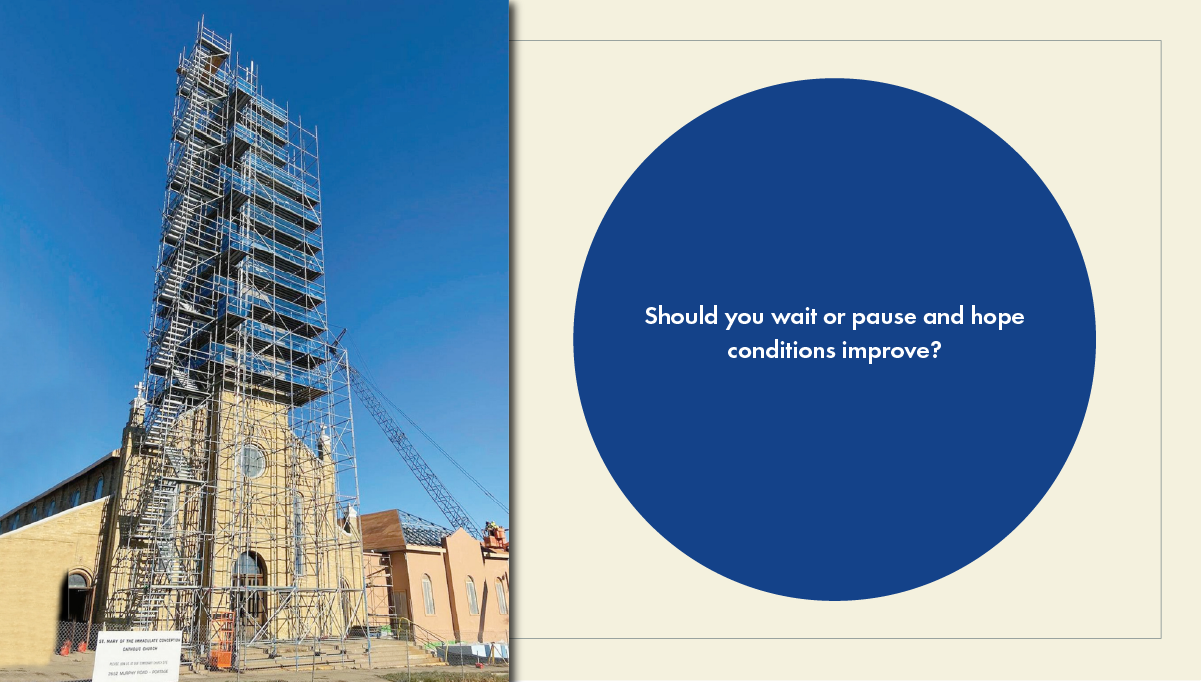
Rising construction and building costs are a reality churches across the country are facing. Inflation has increased the price of materials, labor, and equipment, making projects more expensive than originally planned. For many congregations, this has led to understandable hesitation: Should we wait? Should we pause? Should we hope conditions improve? Rising costs, however, don’t mean reckless decisions,
but intentional ones.
The Cost of Waiting Is Often Higher
In today’s economy, waiting rarely brings prices down. Construction costs have proven to be “sticky,” meaning increases tend to hold rather than reverse. Delaying a project doesn’t stop inflation; it often compounds it. What feels like prudence in the short term can quietly turn into a larger financial challenge later.
We’ve found that churches that postpone necessary projects frequently find themselves facing:
- Higher bids when they revisit the project.
- Additional scope as conditions worsen.
- Fewer contractor options and longer timelines.
Therefore, intentional action, even if it means adjusting your project’s scope or phasing the work, often costs less than doing nothing.
Intentional Doesn’t Mean Rushing
Acting intentionally, though, is not the same as rushing forward without discernment. It means:
- Re-examining priorities.
- Confirming what is essential now and what can wait.
- Making decisions based on current realities rather than hoped-for market shifts.
Strong stewardship recognizes that perfect conditions rarely exist. Wise leaders respond to the environment they are in, not the one they wish for.
Clarity Builds Confidence
When churches clearly articulate why a project matters, whether it is to support growth, ensure safety, or sustain ministry, trust and confidence is built. People are more willing to support well-defined, thoughtfully planned projects than vague or delayed ones.
Intentional decision-making brings focus with:
- Clear goals.
- Realistic timelines.
- Honest financial expectations.
Clarity on these issues reduces anxiety and allows leaders and congregations to move forward together.
The Long View Matters
Church buildings are long-term assets that support ministry for decades. Making decisions about them today will shape not only current operations but future worship, outreach, and community engagement opportunities.
Recognizing this means also means recognizing that choosing not to act is still a decision — and often one with lasting consequences. In a high-cost environment, thoughtful forward movement can be more responsible than waiting for uncertainty to resolve itself.
Strong Leadership Responds to Reality
Every season requires a different kind of leadership. Choosing a path forward isn’t about waiting out the economy, but about making informed, intentional decisions within it. Churches that act with purpose are most likely to look back with gratitude that they didn’t delay when their need was clear.
Download Today – Download a PDF of this information to read and share.